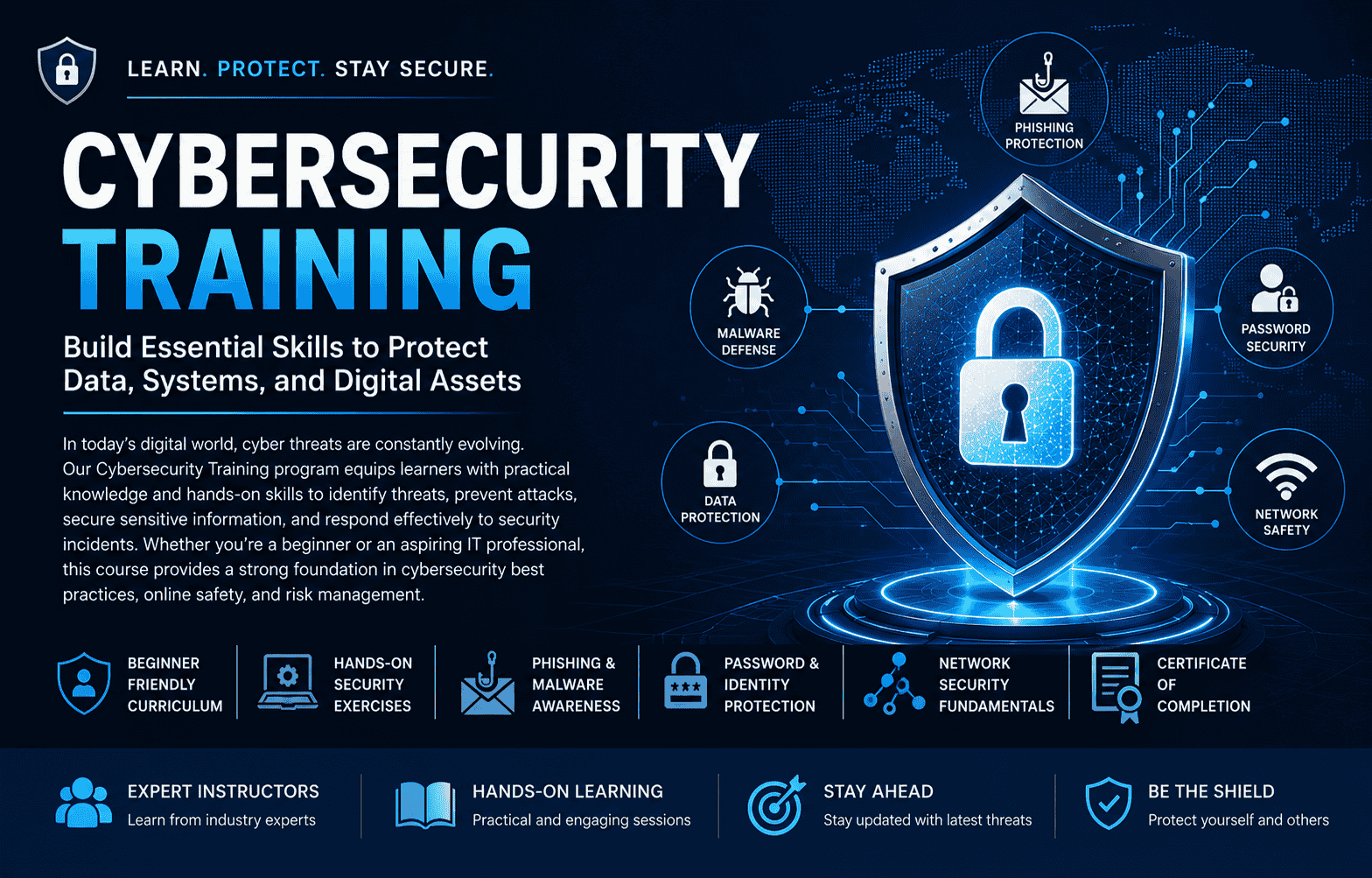
Cybersecurity Training

Cybersecurity Training

Build Essential Skills to Protect Data, Systems, and Digital Assets

Learn. Protect. Stay Secure

Overview of professional soft skills like teamwork, adaptability, and time management

In today's digital world, cyber threats are constantly evolving. Our Cybersecurity Training program equips learners with practical knowledge and hands-on skills to identify threats, prevent attacks, secure sensitive information, and respond effectively to security incidents. Whether you're a beginner or an aspiring IT professional, this course provides a strong foundation in cybersecurity best practices, online safety, and risk management

Key Highlights (Optional)

  • Beginner-Friendly Curriculum
  • Hands-On Security Exercises
  • Phishing & Malware Awareness
  • Password & Identity Protection
  • Network Security Fundamentals
  • Certificate of Completion

Cybersecurity Basics

Understand core cybersecurity concepts, terminology, and the importance of protecting digital information.
Learn how cyber threats impact individuals, businesses, and organizations

Threat Landscape

Explore common cyber threats including malware, ransomware, and phishing attacks.
Recognize how attackers exploit vulnerabilities and human error

Password Security

Learn to create strong passwords and manage credentials securely.
Understand multi-factor authentication (MFA) and account protection techniques

Email Safety

Identify phishing emails, malicious attachments, and suspicious links.
Develop safe email practices to avoid social engineering attacks

Network Security

Understand basic network concepts and common security risks.
Learn how firewalls, VPNs, and secure Wi-Fi help protect data

Data Protection

Discover methods for securing sensitive and confidential information.
Learn data handling, backup strategies, and privacy best practices

Device Security

Protect computers, smartphones, and other connected devices.
Learn the importance of updates, antivirus tools, and secure configurations.

Web Security

Recognize unsafe websites, fake login pages, and online scams.

Practice safe browsing habits to reduce cyber risks

Social Engineering

Understand how attackers manipulate people to gain unauthorized access.
Learn techniques to detect and prevent deception-based attacks

Incident Response

Learn what actions to take when a security incident occurs.
Understand reporting procedures and basic recovery measures

Security Awareness

Develop a security-first mindset for everyday digital activities.
Apply best practices to reduce personal and workplace cyber risks

Practical Exercises

Participate in real-world scenarios and threat identification activities.
Build confidence through hands-on cybersecurity awareness exercises