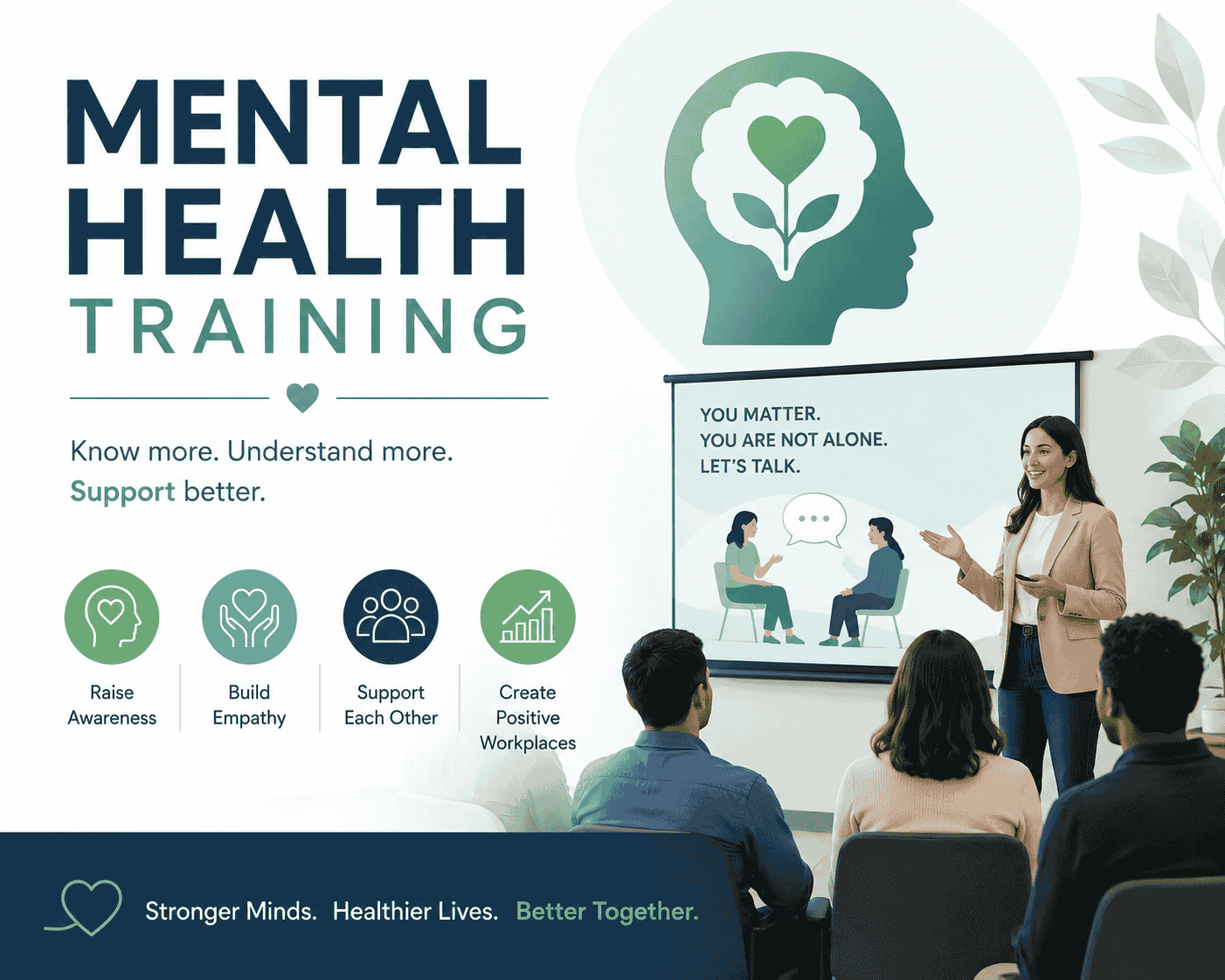
Objective: To empower employees at all levels with the knowledge, skills, and tools necessary to foster a supportive and resilient workplace culture, promoting positive mental health and well-being.
Problem: Workplace stress, burnout, and mental health challenges are on the rise, impacting employee engagement, productivity, and retention. Traditional approaches are often reactive rather than proactive.
Solution: A comprehensive, interactive mental health training program that provides participants with actionable strategies for self-care, supporting colleagues, and creating a psychologically safe environment.
Understanding Mental Health: Overcoming stigma, recognizing common signs and symptoms of stress, anxiety, and depression in oneself and others.
Proactive Well-being: Implementing evidence-based strategies for stress management, resilience building, and prioritizing self-care.
Supportive Conversations: Learning active listening techniques and appropriate ways to offer support to a colleague who may be struggling.
Psychological Safety: Creating an environment where employees feel comfortable speaking up, seeking help, and bringing their whole selves to work.
Manager Training: Equipping leaders with the skills to recognize early signs of distress, initiate supportive conversations, and connect employees with resources.
Resource Awareness: Familiarizing employees with available mental health resources (EAP, external support services) and how to access them.
Interactive and Engaging: Utilizing case studies, role-playing, and group discussions to make the training practical and impactful.
Measurement and Evaluation: Tracking program effectiveness through pre- and post-training surveys to measure changes in knowledge, attitudes, and behaviors.
- Strategic Planning: Aligning workforce capabilities with long-term business goals through resource allocation and structural organization.
- Collaboration and Engagement: Cultivating a collaborative environment where cross-functional teams can communicate effectively to solve complex problems and drive innovation.